Operational field coordination
Connect scoped smart hands and break/fix activities to operational contacts, asset records and approved work instructions, capturing outcomes that the team can use for subsequent support.

Keep the physical environment understood as it evolves
An infrastructure estate changes long after its first acceptance pack is signed. O-Connect connects routine field support, expansion, refresh and decommissioning to the environment's operating model, helping each activity preserve asset traceability and usable records. The aim is continuity: today's change should leave tomorrow's team with a clear starting position.

A lifecycle view begins with the relationship between live records and planned work. Equipment identity, rack capacity, connection maps and operational ownership shape how a support activity or expansion should be approached. O-Connect coordinates these inputs for the scoped field work, making dependencies and authorisations visible before a change is scheduled in the live environment.
Refresh and retirement introduce further handoffs: replacement equipment must be accepted, affected connections reconciled and removed assets accounted for. The approved plan identifies who owns each decision, including data handling and disposal where relevant. Execution and closure records then preserve the link between the previous state, the authorised activity and the environment handed back to operations.
Connect scoped smart hands and break/fix activities to operational contacts, asset records and approved work instructions, capturing outcomes that the team can use for subsequent support.
Coordinate the physical requirements of approved additions with available rack, facility and connectivity information, identifying readiness dependencies before new equipment is introduced into the operating environment.
Support the agreed replacement sequence and associated field work, keeping asset identity, connection changes and acceptance responsibilities clear as new equipment takes its planned operational position.
Record authorised equipment removals and the agreed custody handoffs, updating affected infrastructure records while referring data handling and disposal requirements to the customer's designated responsible owners.
Review available asset and connection records with operational owners, identify the intended lifecycle activity and confirm the approvals, dependencies and evidence required for its planned execution.
Sequence the scoped field work with the relevant support, facility and platform teams, recording decisions and keeping live-service boundaries visible throughout the approved activity and handoffs.
Reconcile completed work, changed assets and affected connections, then return the updated records and remaining actions to operations so the next request starts from an understood position.

Support, expansion and refresh activities leave a connected record of the estate's physical evolution. Operations can identify the current asset and connection position, understand completed handoffs and see outstanding responsibilities, preserving continuity between the original deployment, subsequent changes and the eventual retirement of equipment.
Define your acceptance criteriaDay-2 field support covers scoped operational activities such as smart hands, repairs and planned changes. Lifecycle operations connects that execution to longer-running estate needs, including capacity additions, refresh and retirement, with attention to the records and ownership carried between activities.
Yes. The project needs to identify live-service boundaries, approved change windows and the facility and connectivity dependencies of the proposed equipment. O-Connect coordinates the agreed field work around those inputs, with acceptance and updated records included in the closure plan.
Those responsibilities must be assigned in the customer's approved retirement plan. O-Connect's field scope and custody handoffs are defined explicitly, while data sanitisation, destruction evidence and disposal decisions remain with the appointed owners unless separately established in the agreed delivery scope.
Support live infrastructure with scoped smart hands, break/fix coordination, adds, moves and changes, backed by clear work instructions and updated records.
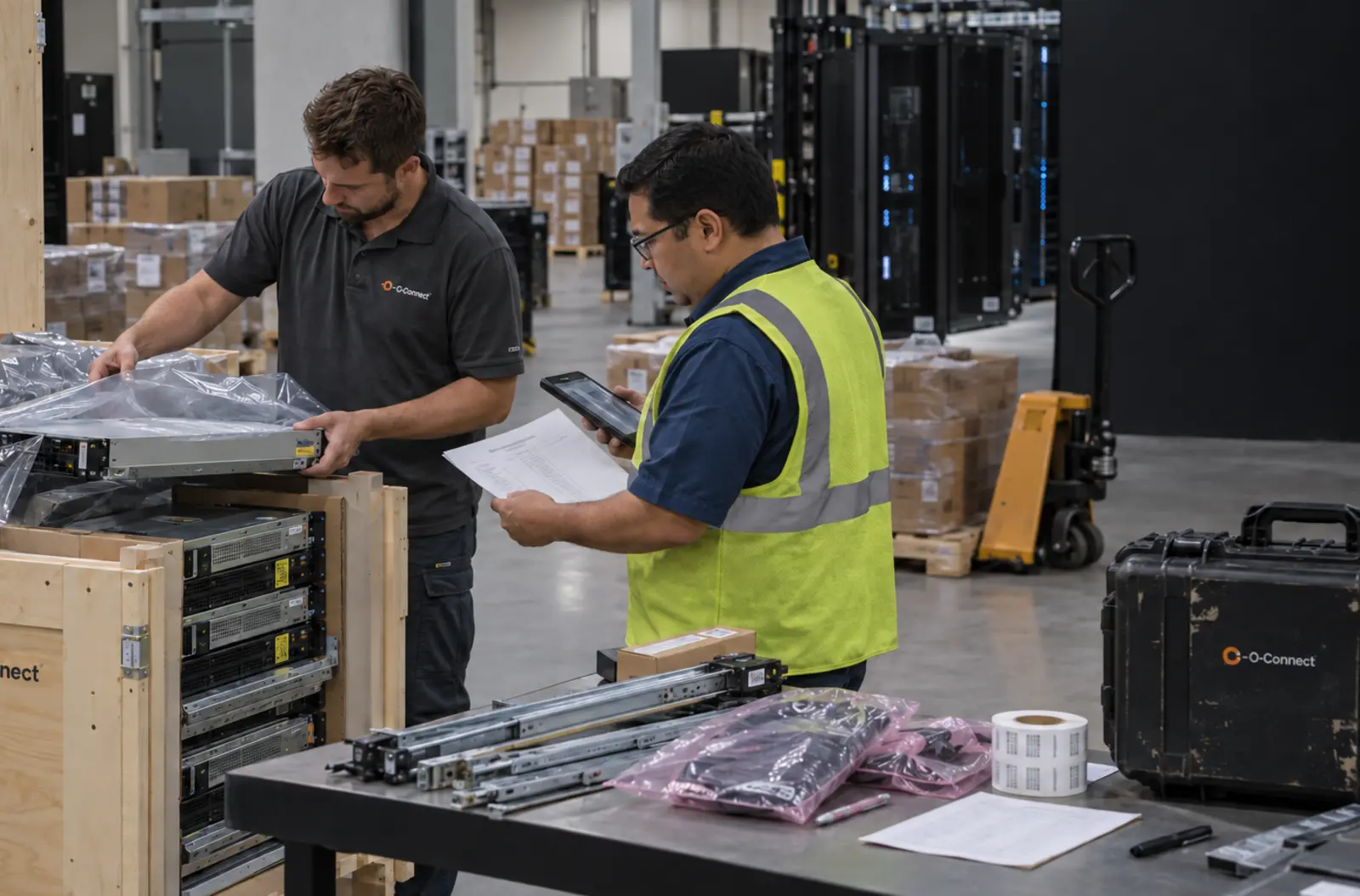
Plan infrastructure moves around dependencies, change windows and acceptance gates, with reconciled assets, clear cutover ownership and rollback criteria.
Build an evidence-based handover with agreed checks for firmware, hardware health, thermal behaviour and workloads across the deployed infrastructure.